Burnout affects far more than your energy levels. It is a state of physical, emotional, mental,and often spiritual exhaustion that develops after prolonged stress without adequaterecovery. Research describes burnout through three core dimensions: overwhelmingexhaustion, increasing mental distance or cynicism, and reduced effectiveness. However,many women in midlife experience a much broader range of symptoms.
Physical symptoms
- Persistent fatigue that doesn’t improve with rest
- Waking up feeling exhausted
- Difficulty falling asleep or staying asleep
- Brain fog and poor concentration
- Forgetfulness
- Frequent headaches or migraines
- Muscle tension, neck and shoulder pain
- Digestive problems (bloating, IBS, constipation or diarrhoea)
- Increased inflammation and body aches
- Weight gain or unexplained weight loss
- Hormonal imbalances
- Low libido
- Frequent colds or infections due to reduced immune function
- Heart palpitations or feeling “wired but tired”
- Dizziness or light-headedness
- Craving sugar, caffeine or alcohol to get through the day
Emotional symptoms
- Feeling overwhelmed by everyday tasks
- Irritability and a short temper
- Anxiety or constant worry
- Feeling emotionally numb
- Loss of joy or enthusiasm
- Increased tearfulness
- Feeling trapped or hopeless
- Low self-esteem
- Feeling guilty for not doing enough
- Feeling disconnected from yourself and others
Mental symptoms
- Difficulty concentrating
- Poor decision-making
- Reduced creativity
- Constant racing thoughts
- Feeling mentally “full”
- Loss of motivation
- Procrastination
- Forgetting appointments or conversations
- Feeling like you’re always behind
- Difficulty solving problems
Behaviour symptoms
- Withdrawing from friends and family
- Avoiding responsibilities
- Overworking despite feeling exhausted
- Difficulty saying no
- People-pleasing at the expense of your own needs
- Neglecting self-care
- Increased reliance on caffeine, alcohol, food or other coping mechanisms
- Cancelling social activities
- Loss of interest in hobbies
Nervous system symptoms
Many burnout symptoms reflect a nervous system that has been under prolonged stress:
- Feeling constantly “on alert”
- Being easily startled
- Sensitivity to noise or busy environments
- Difficulty relaxing
- Feeling restless even when sitting still
- Alternating between anxiety and exhaustion
- Feeling detached or disconnected from your body
Symptoms Common in Women in Midlife
Burnout can overlap with hormonal changes, making it harder to recognise. Common experiences include:
- Feeling unlike yourself
- Increased belly weight
- Night sweats made worse by stress
- Mood swings
- Loss of confidence
- Reduced resilience
- Feeling invisible or unfulfilled
- Difficulty balancing work, family and caregiving responsibilities
- Wondering, “Is this all there is?”
When burnout becomes more serious
If left unaddressed, burnout may contribute to:
- Chronic anxiety
- Depression
- Persistent insomnia
- High blood pressure
- Metabolic changes
- Chronic pain
- Increased risk of cardiovascular disease
- A prolonged recovery period that can take months rather than weeks
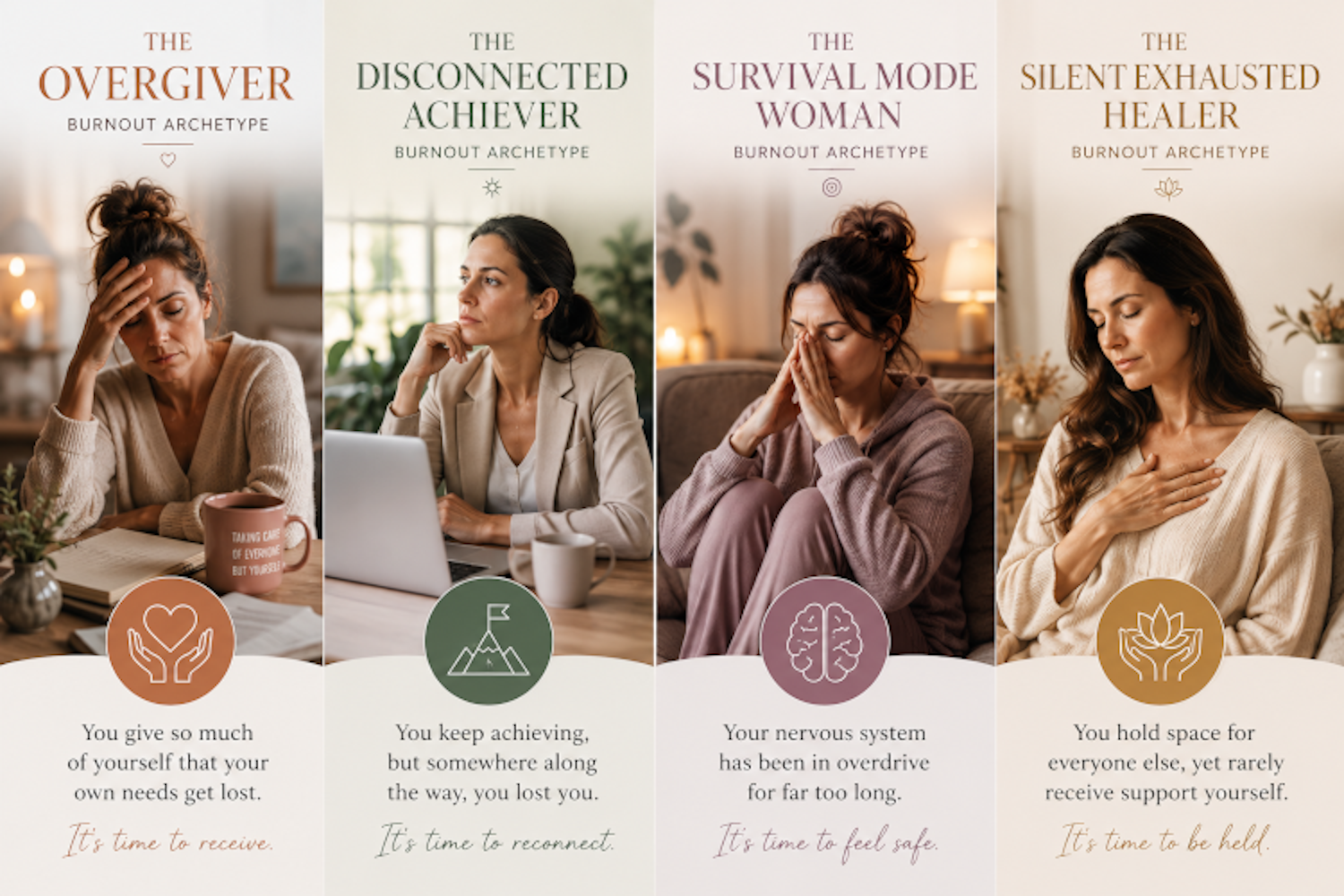
click on image to take my free quiz and discover your burnout patterns

Leave a Reply