If you’re a woman in midlife experiencing burnout, you’re probably asking the same question many of my clients ask: “How long before I feel like myself again?” The answer is that burnout recovery is rarely measured in weeks—it is usually measured in months. But here’s the good news: with the right support, you don’t have to navigate that journey alone, and you don’t have to rely on trial and error. Burnout isn’t simply feeling tired. It’s a whole-body response to prolonged stress that affects your nervous system, hormones, sleep, immune function, digestion, energy, emotions and even your sense of identity. For many women, especially during perimenopause and menopause, burnout can feel like they’ve lost the woman they used to be.
How long does recovery take?
Every woman’s journey is different, but research suggests these general recovery timelines:
Severity Mild burnout Moderate burnout Severe burnout
Recovery Time 1–3 months 3–6 months 6–18 months (sometimes longer)
Recovery depends on several factors, including how long you’ve been living with chronic stress, your overall health, hormonal changes, your support network, and whether you’re addressing the root causes rather than simply treating the symptoms.
Why recovery can take longer in midlife
Women over 45 are often juggling careers, caring for children or ageing parents, relationship demands, hormonal changes and years of putting everyone else’s needs before their own.
By the time they seek help, many have been operating in survival mode for years.
This prolonged stress can lead to:
Constant fatigue that rest doesn’t fix
Brain fog and poor concentration
Anxiety or emotional overwhelm
Poor sleep
Weight gain and stubborn inflammation
Digestive issues
Frequent illness
Hormonal imbalance
Feeling disconnected from yourself and your purpose
A holiday or a few early nights may provide temporary relief, but lasting recovery requires your body to relearn how to feel safe, rested and balanced again.
What actually needs to heal?
Burnout recovery isn’t just about having more energy. It’s about restoring the systems that chronic stress has disrupted. Your Nervous System Your body has often been stuck in “fight or flight” for far too long. Recovery means teaching your nervous system how to regulate again so that calm, resilience and emotional balance become your new normal. Your Hormones Long-term stress affects cortisol, insulin, thyroid function and reproductive hormones, often making menopause symptoms feel even worse. Your Sleep Sleep is one of the last things to recover. Many women wake between 2 am and 4 am, struggle to fall asleep or wake feeling exhausted despite spending enough time in bed. Your Brain Brain fog, forgetfulness, poor focus and reduced creativity are all common signs that your brain has been under prolonged stress. Your Body Inflammation, digestive issues, muscle tension, immune dysfunction and chronic pain are often part of the burnout picture and deserve attention—not just symptom management.
Why working together can shorten your recovery journey
One of the biggest reasons burnout recovery takes so long is that women often spend months—or even years—trying to figure it out on their own. They search online for answers, try the latest supplements, push themselves to exercise harder, or simply tell themselves they need to “get on with it.” But burnout is rarely caused by just one thing. It is usually the result of multiple layers of physical, emotional and nervous system overload. My approach is different because we work with the whole person. Together we identify what’s keeping your body stuck in survival mode and create a personalised pathway back to health using an integrated approach that supports both body and mind. Depending on your individual needs, your programme may include:
Therapeutic massage to calm the nervous system, reduce muscle tension and support lymphatic flow.
Lymphatic drainage to reduce inflammation, swelling and assist your body’s natural detoxification processes.
Kinesiology to uncover hidden stress patterns and restore balance.
Frequency-based therapies to support your body’s natural healing processes.
Breathwork and nervous system regulation techniques to move you from constant “doing” into genuine restoration.
Lifestyle, nutrition and stress-recovery guidance tailored specifically to where you are in your journey.
Gentle coaching with accountability, encouragement and compassionate support so you don’t have to navigate recovery alone.
Rather than guessing what your body needs next, we work together to understand your unique stress patterns and respond with the right support at the right time.
The women I journey with tell me that simply having someone who truly understands burnout, has lived it, —and who can help them make sense of what they’re experiencing—brings an enormous sense of relief.
Recovery isn’t about going back
One of the greatest misconceptions about burnout is that recovery means getting back to who you were before. I believe burnout is your body’s invitation to create something better. Together, we don’t simply aim to restore your energy—we help you build a life that no longer requires you to sacrifice your health, your joy or your sense of self. As energy returns, many women also rediscover confidence, purpose, healthier boundaries and a renewed connection with themselves.
You don’t have to do this alone
Healing from burnout takes time, but with the right guidance, personalised support and a whole-person approach, recovery becomes clearer, gentler and far more sustainable.
If you’re exhausted from pushing through, constantly putting yourself last or wondering why nothing you’ve tried seems to work, I’d love to help.
Together, we’ll uncover what’s really driving your burnout and create a personalised pathway that helps you restore your energy, rebuild your resilience and reconnect with the woman you were born to be.
Your body isn’t working against you—it has been protecting you. Now it’s time to help it heal.
You promise yourself that tonight you will get an early night.
But then your head hits the pillow and suddenly your mind is wide awake.
Or perhaps you fall asleep easily, only to wake at 2am, 3am or 4am — your body tired but your brain already thinking, planning, worrying or replaying the day.
For many women in midlife, sleep seems to change almost overnight. The deep, restorative sleep that once came naturally becomes lighter and more fragmented. You may wake more often, struggle to fall back asleep or open your eyes in the morning feeling as though you have barely rested.
It is easy to blame everything on menopause.
But hormones may be only part of the story.
For many women, the menopausal transition arrives after years — sometimes decades — of accumulated stress. Careers, relationships, parenting, caregiving, financial pressure, emotional strain and the constant responsibility of holding everything together can place enormous demands on the body’s stress-response systems.
Then hormonal changes begin.
The result can be a perfect storm for disrupted sleep.
Research shows that sleep disturbance becomes increasingly common during the menopausal transition, with nighttime awakenings among the most frequent complaints. Some research estimates that up to 69% of midlife women report sleep disturbance, although not all meet the clinical criteria for insomnia.
Why stress and sleep are so closely connected
Your body has an internal stress-response system involving the brain, nervous system and hormones. One important part of this system is the hypothalamic-pituitary-adrenal axis, commonly known as the HPA axis.
When your brain perceives a threat or significant demand, the stress-response system helps mobilise the body to cope.
In the short term, this is protective.
Your heart rate may increase. Your attention becomes sharper. Energy is made available. Stress hormones, including cortisol, help prepare you to respond.
The problem is not that your body has a stress response.
The problem can arise when the stress response is repeatedly activated without enough opportunity for recovery.
Long-term stress may contribute to changes in the regulation of the HPA axis and the autonomic nervous system. At the same time, insufficient or disrupted sleep can itself affect stress physiology.
In other words:
Stress can disturb sleep, and poor sleep can make the body more vulnerable to stress.
A self-reinforcing cycle can develop.
You are stressed, so you sleep poorly.
You sleep poorly, so you have less emotional and physical resilience the next day.
Ordinary challenges begin to feel more overwhelming.
Your body becomes more reactive.
You worry about not sleeping.
And bedtime itself can gradually become associated with effort, frustration and alertness rather than safety and rest.
Why this can become more noticeable in midlife
Midlife can bring together several biological and psychological changes at once.
During perimenopause and menopause, fluctuations and eventual changes in reproductive hormones can affect systems involved in temperature regulation, mood and sleep. Hot flushes and night sweats can cause repeated awakenings, while anxiety, low mood, pain and other physical symptoms can make sleep more difficult.
At the same time, many women are experiencing some of the most demanding years of their lives.
They may be:
caring for children while also supporting ageing parents
carrying significant responsibility at work
dealing with relationship changes or loss
questioning their identity and purpose
experiencing financial pressure
navigating physical and hormonal changes
living with years of unresolved emotional stress
feeling that they must continue functioning regardless of how depleted they feel
This is why sleep problems in midlife should not automatically be dismissed as “just hormones.”
Hormones matter. But so do stress, emotional wellbeing, nervous-system arousal, lifestyle, physical health and the presence of underlying sleep disorders.
The “tired but wired” pattern
One of the most frustrating experiences of chronic stress is feeling physically exhausted but unable to fully switch off.
This is sometimes described as hyperarousal.
You may desperately want to sleep, yet your system remains alert.
This can feel like:
a racing mind when you get into bed
replaying conversations from the day
mentally running through tomorrow’s tasks
waking suddenly during the night and immediately beginning to think
feeling restless or unable to get comfortable
becoming anxious about whether you will sleep
feeling your heart beating strongly when you wake
being exhausted during the day but more alert at night
struggling to relax without television, scrolling, alcohol or another distraction
waking feeling unrefreshed despite spending enough time in bed
The important point is that sleep cannot always be forced.
Sleep is more likely to emerge when the brain and body receive the conditions that allow them to reduce vigilance.
For some women, improving sleep therefore involves more than simply going to bed earlier.
It may involve addressing the stress and arousal that the body is carrying into the night.
Signs That Long-Term Stress May Be Affecting Your Sleep
Stress-related sleep disturbance can look different for every woman, but common patterns may include:
difficulty falling asleep
frequent nighttime waking
waking too early and being unable to return to sleep
feeling exhausted but unable to switch off
racing thoughts at bedtime
increased irritability or emotional sensitivity
anxiety or a sense of being constantly “on”
poor concentration and brain fog
forgetfulness
daytime fatigue
headaches
muscle tension, particularly in the neck, shoulders and jaw
digestive disturbance
relying on caffeine to function during the day
relying on alcohol, medication or other substances to relax at night
feeling less resilient to everyday stress
These symptoms are not proof that stress is the only cause. Persistent sleep disturbance deserves proper assessment because menopause symptoms, depression, anxiety, pain, thyroid conditions, medication effects, restless legs syndrome and sleep apnoea can also contribute.
Why Poor Sleep Can Make Everything Feel Worse
Sleep is not simply a period when the body “switches off.”
It is an essential biological process involved in emotional regulation, cognitive function, metabolic health and physical recovery.
When sleep is repeatedly disrupted, you may notice changes in:
Mood: You may feel more irritable, anxious, tearful or emotionally reactive.
Thinking: Concentration, memory and decision-making may become more difficult.
Energy: You may feel physically exhausted but still struggle to rest deeply.
Appetite and metabolism: Sleep and stress are closely connected with metabolic regulation.
Pain: Poor sleep can make the body more sensitive to discomfort.
Stress tolerance: Problems that once felt manageable may begin to feel overwhelming.
This is why telling an exhausted woman simply to “get more sleep” is often not enough.
Sometimes the deeper question is:
What is preventing her body and mind from settling into rest?
What can help?
There is rarely one universal solution. The most effective approach is often to identify the different factors contributing to disrupted sleep and address them together.
1. Create a consistent sleep-wake rhythm
A regular wake-up time helps reinforce the body’s internal circadian rhythm.
Try to wake at approximately the same time each day, even after a difficult night. Get natural morning light where possible and build a predictable rhythm around meals, movement and sleep.
The body responds well to consistency.
2. Reduce stimulation before bed
The hour before sleep should ideally become a transition rather than an extension of the working day.
Consider dimming lights, stepping away from work, reducing stimulating content and creating a simple evening ritual.
This might include:
a warm shower or bath
gentle stretching
slow breathing
meditation
journalling
calming music
reading something relaxing
The goal is not to perform the perfect bedtime routine. It is to repeatedly give the brain cues that the active part of the day is ending.
3. Address the mental load before you get into bed
If your mind becomes a meeting room at midnight, try giving your thoughts somewhere to go earlier in the evening.
Write down:
what is worrying you
what needs to be done tomorrow
what can wait
what is outside your control
one or two priorities for the following day
This can help reduce the need to mentally rehearse everything while you are trying to sleep.
4. Work with the stress response during the day
You cannot always compensate for a highly stressed day with ten minutes of relaxation at bedtime.
Small moments of recovery throughout the day matter.
This might include slow breathing, time in nature, walking, gentle movement, massage, mindfulness, meaningful connection or simply creating brief periods without constant stimulation.
The aim is not to eliminate all stress.
It is to create more opportunities for the body to move out of continuous activation.
5. Look at caffeine and alcohol
Caffeine can remain active in the body for hours and may affect sleep even when you can still fall asleep easily.
Alcohol may initially make you feel sleepy, but it can contribute to more fragmented sleep later in the night.
If you are struggling with sleep, experimenting with less caffeine — particularly later in the day — and reducing evening alcohol can provide useful information about your individual sensitivity.
6. Support Your body through the menopausal transition
If hot flushes, night sweats or other menopausal symptoms are repeatedly waking you, treating the underlying symptoms may improve sleep.
Speak to an appropriately qualified healthcare professional about your individual symptoms and the treatment options available to you. Depending on your health history and circumstances, these may include behavioural approaches, treatment for specific sleep disorders, psychological therapies and, for some women, menopausal hormone therapy or other medical treatments.
7. Consider CBT or kinesiology for insomnia
CBT and kinesiology goes beyond general “sleep hygiene.” It works with the behaviours, thought patterns and conditioned responses that can keep insomnia going.
This can be particularly valuable when a woman has reached the point where she is worrying about sleep itself.
When to seek professional help
Please seek medical advice if your sleep difficulties are persistent, significantly affecting your ability to function, or accompanied by symptoms such as severe anxiety or depression.
It is also important to investigate symptoms such as:
loud snoring
choking or gasping during sleep
significant daytime sleepiness
uncomfortable or irresistible urges to move the legs at night
persistent pain
severe night sweats
unexplained changes in health
Not every midlife sleep problem is caused by stress or menopause, and identifying the underlying contributors is an important part of finding the right solution.
Your body may need more than sleep — it may need recovery
One of the most important shifts we can make in midlife is to stop seeing exhaustion as a personal failure.
Sometimes a woman is not simply “bad at sleeping.”
She may be carrying years of physical, mental and emotional load while simultaneously navigating one of the most significant biological transitions of her life.
The answer may not be to push harder, become more disciplined or buy another sleep supplement.
It may be to begin looking at the whole picture.
How much stress is your body carrying?
How often do you genuinely feel relaxed?
Do you have space to recover — or do you simply collapse at the end of the day?
Are menopausal symptoms disrupting your sleep?
Has your bed become a place where you worry about not sleeping?
And what would change if, instead of simply trying to make yourself sleep, you began creating the conditions that allow your body to feel safe enough to rest?
Midlife can be an invitation to create a different relationship with your body.
One based not on pushing through exhaustion, but on listening.
Not on fighting your symptoms, but becoming curious about what they may be telling you.
Because sometimes better sleep begins long before your head touches the pillow.
If you are struggling with chronic stress, exhaustion and disrupted sleep in midlife, support can begin with understanding the patterns that may be keeping your body in a state of constant activation. Through an integrative approach that considers stress, the nervous system, lifestyle, physical wellbeing and the changes of midlife, we can begin exploring what your body needs to move towards greater balance, recovery and rest.
Burnout affects far more than your energy levels. It is a state of physical, emotional, mental,and often spiritual exhaustion that develops after prolonged stress without adequaterecovery. Research describes burnout through three core dimensions: overwhelmingexhaustion, increasing mental distance or cynicism, and reduced effectiveness. However,many women in midlife experience a much broader range of symptoms.
Physical symptoms
Persistent fatigue that doesn’t improve with rest
Waking up feeling exhausted
Difficulty falling asleep or staying asleep
Brain fog and poor concentration
Forgetfulness
Frequent headaches or migraines
Muscle tension, neck and shoulder pain
Digestive problems (bloating, IBS, constipation or diarrhoea)
Increased inflammation and body aches
Weight gain or unexplained weight loss
Hormonal imbalances
Low libido
Frequent colds or infections due to reduced immune function
Heart palpitations or feeling “wired but tired”
Dizziness or light-headedness
Craving sugar, caffeine or alcohol to get through the day
Emotional symptoms
Feeling overwhelmed by everyday tasks
Irritability and a short temper
Anxiety or constant worry
Feeling emotionally numb
Loss of joy or enthusiasm
Increased tearfulness
Feeling trapped or hopeless
Low self-esteem
Feeling guilty for not doing enough
Feeling disconnected from yourself and others
Mental symptoms
Difficulty concentrating
Poor decision-making
Reduced creativity
Constant racing thoughts
Feeling mentally “full”
Loss of motivation
Procrastination
Forgetting appointments or conversations
Feeling like you’re always behind
Difficulty solving problems
Behaviour symptoms
Withdrawing from friends and family
Avoiding responsibilities
Overworking despite feeling exhausted
Difficulty saying no
People-pleasing at the expense of your own needs
Neglecting self-care
Increased reliance on caffeine, alcohol, food or other coping mechanisms
Cancelling social activities
Loss of interest in hobbies
Nervous system symptoms
Many burnout symptoms reflect a nervous system that has been under prolonged stress:
Feeling constantly “on alert”
Being easily startled
Sensitivity to noise or busy environments
Difficulty relaxing
Feeling restless even when sitting still
Alternating between anxiety and exhaustion
Feeling detached or disconnected from your body
Symptoms Common in Women in Midlife
Burnout can overlap with hormonal changes, making it harder to recognise. Common experiences include:
Feeling unlike yourself
Increased belly weight
Night sweats made worse by stress
Mood swings
Loss of confidence
Reduced resilience
Feeling invisible or unfulfilled
Difficulty balancing work, family and caregiving responsibilities
Wondering, “Is this all there is?”
When burnout becomes more serious
If left unaddressed, burnout may contribute to:
Chronic anxiety
Depression
Persistent insomnia
High blood pressure
Metabolic changes
Chronic pain
Increased risk of cardiovascular disease
A prolonged recovery period that can take months rather than weeks
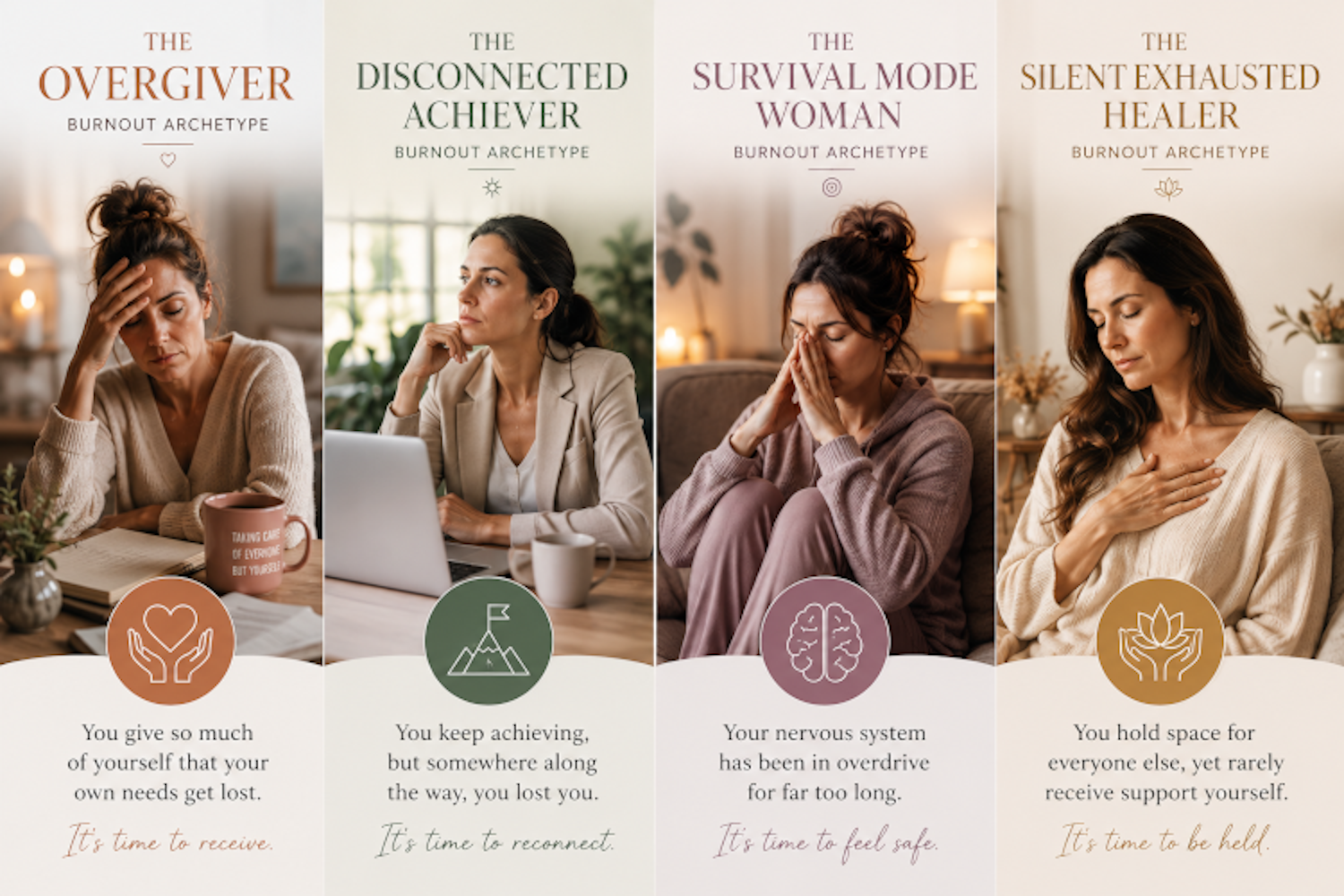
click on image to take my free quiz and discover your burnout patterns